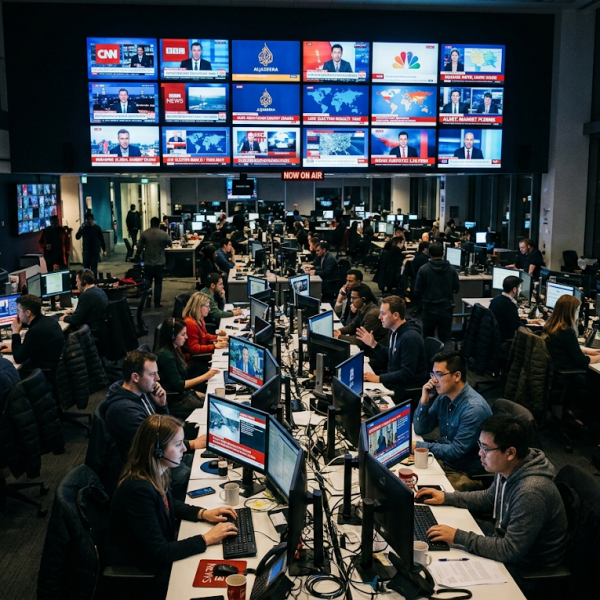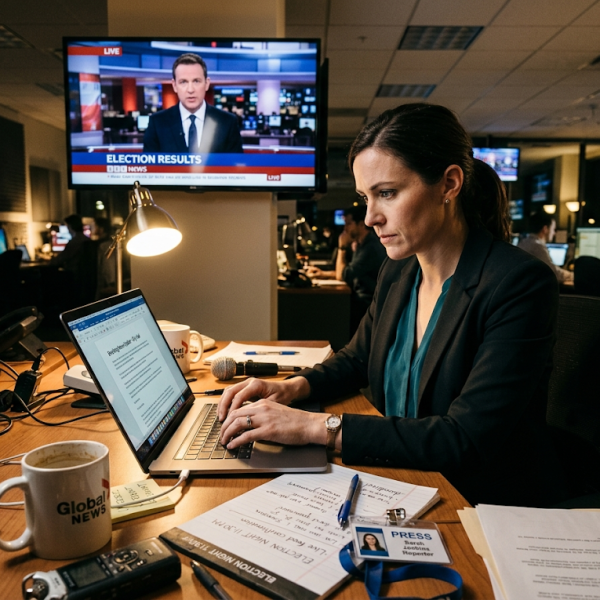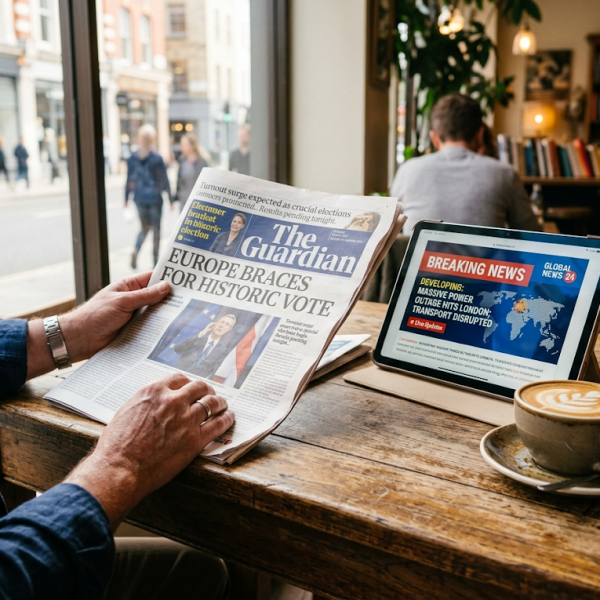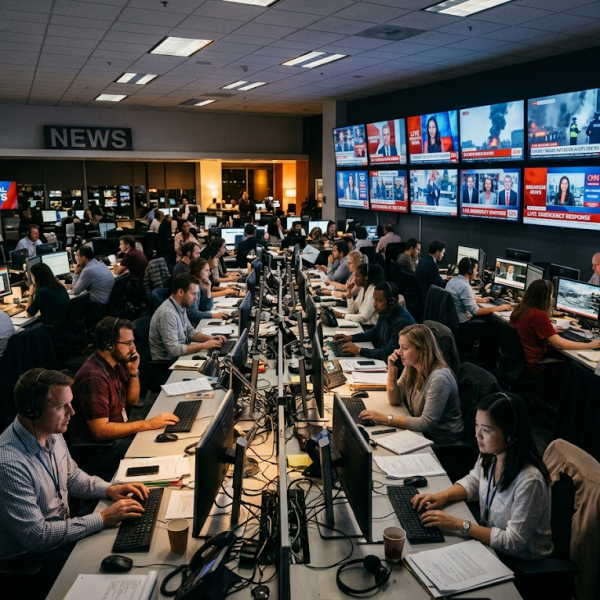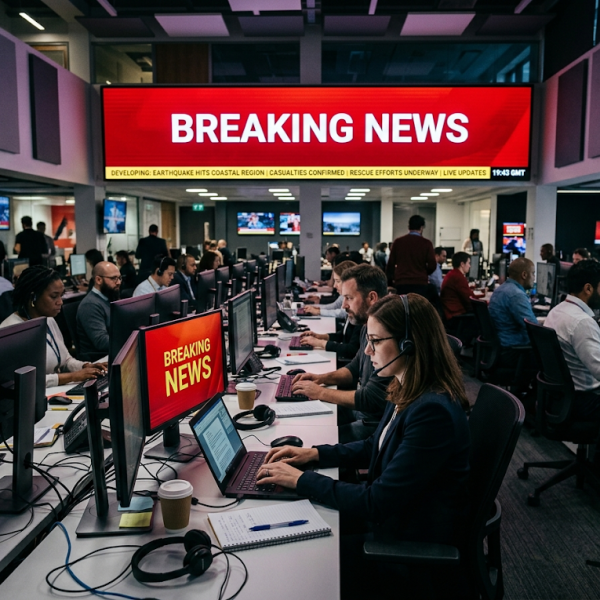
Breaking news rarely waits for a translator to catch up, yet accuracy under pressure is exactly what separates a credible outlet from one issuing constant corrections. Every day, editors juggle incoming reports in languages they don't speak, racing to publish before information goes stale.
The Split-Second Decisions Editors Make
When a foreign government issues a statement or a court hands down a ruling, newsroom staff often have minutes, not hours, to understand what it says before deciding how to cover it. A rushed or incorrect translation can send an entire story down the wrong path.
For a statement delivered live there is no document to send anywhere, which is a different problem from translating a filing. Over-the-phone interpreting covers that gap, and PoliLingua offers it alongside on-site and video formats, so a desk can hear a spoken rendering while the press conference is still running. What comes back is a working understanding rather than a quotable text, and the two should not be confused once copy is being written.
Wire editors who have been burned by a bad translation tend to build stronger verification habits afterward, but the damage from one bad call can linger.
Where Certified Translation Comes In
Not every piece of breaking news needs a certified translation, but legal documents, government filings and official statements often do. Certified translation services provide a version of a document that can be defended if its accuracy is ever questioned, which matters when a story touches on legal proceedings or regulatory action.
Outlets that publish quickly without this safeguard risk retracting stories later, a costly outcome for both credibility and resources.
When German Sources Enter the Picture
Germany's economic and political weight means its statements, rulings and corporate disclosures regularly make international headlines. Newsrooms covering these stories often depend on specialized german translation services to render source material accurately under deadline pressure.
A single misread figure in a German earnings report or policy statement can shift the entire narrative of a breaking story, which is why many editors insist on a second check before publishing anything translated from German.
Building Trust With Every Story
Readers form an opinion of an outlet's credibility fast, often within the first few paragraphs of a story. A clumsy or inaccurate translation buried in an international story can undermine that trust just as quickly as a factual error closer to home.
Newsrooms that invest in reliable translation partners tend to publish fewer corrections over time, which strengthens reader confidence in their international coverage specifically.
Breaking coverage compresses complicated findings into a headline, usually within hours of publication. Caveats are the first casualty. Reporting on clinical research is where that compression does the most damage, because readers act on what they understand.
Breaking news coverage depends on translation happening at the speed of the story, which leaves very little room for a second pass. Latin American reporting is a persistent weak point, because outlets reach for whichever Portuguese speaker happens to be available. Reliable brazilian portuguese translation matters here more than most desks realise, since terminology in law and politics diverges sharply from the European variety.
How Newsrooms Prepare in Advance
Smart editors don't wait for a crisis to find a translator. Many outlets keep a shortlist of vetted, certified translation providers ready to go, so that when a breaking story requires document translation, there's no scramble to find someone qualified.
This kind of preparation matters most during major international events, when multiple outlets are racing to publish and errors are more likely to slip through.
Preparation increasingly has a technical side as well. Many desks now test ai tools that draft translations, flag inconsistent terminology, and surface background on unfamiliar institutions before a story peaks. The tools do not sign off on accuracy — editors still do — but they compress the slow, mechanical parts of the workflow. For small teams especially, that reclaimed time is what makes a proper second check possible at all.
What Press Freedom Groups Say About Accuracy
Organizations such as the Committee to Protect Journalists regularly highlight how accuracy, including in translated material, underpins press credibility worldwide. A single mistranslation can have consequences well beyond a single article, especially in politically sensitive coverage.
The Society of Professional Journalists similarly emphasizes verification as a core ethical standard, one that extends naturally to translated sources and documents.
Looking Ahead
As newsrooms cover an increasingly interconnected world with tighter deadlines, the demand for fast, accurate translation will only grow. Outlets that build certified translation into their editorial process, rather than treating it as an afterthought, are better positioned to break news accurately and keep their readers' trust intact.