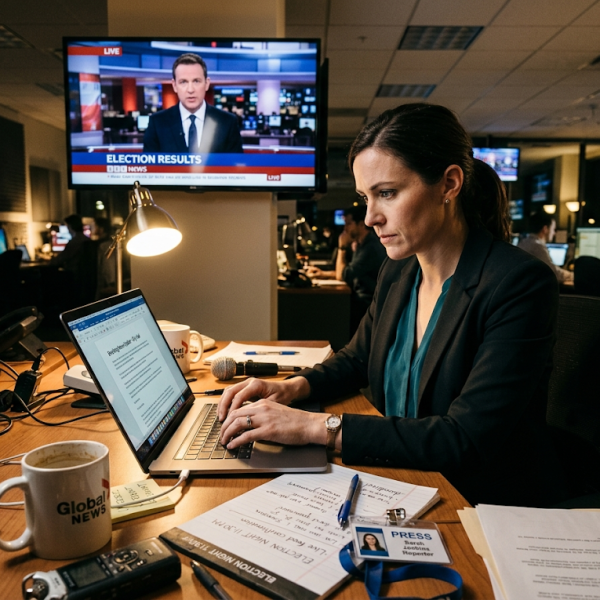
When a story breaks overseas, newsroom editors face a familiar dilemma: publish fast or publish accurately. The best outlets manage to do both, and the difference often comes down to how quickly they can get reliable translation on foreign-language source material.
Racing the Clock Without Cutting Corners
Breaking international stories frequently arrive as raw documents, leaked memos, or eyewitness statements in a language the newsroom doesn't natively speak. Editors under deadline pressure are tempted to rely on quick machine translations, but a single misread phrase in a legal filing or government statement can turn an accurate report into a costly correction. This is why serious newsrooms keep certified translation services on standby for exactly these moments.
Using online certified translation services allows reporters to get a verified rendering of a foreign document within hours rather than days, keeping the story moving without sacrificing accuracy on the details that matter most.
Live material raises the same problem in spoken form. When a press conference, official briefing, or eyewitness interview happens in another language, editors increasingly rely on phone-based interpreting services to get a qualified interpreter on the line within minutes. The interpreter renders quotes as they are spoken, so reporters can publish with confidence instead of waiting for a transcript. It is the spoken counterpart to the certified document workflow: fast, but still accountable to accuracy.
When Legal Language Enters the Picture
Stories involving court filings, contracts, or regulatory documents raise the stakes even further. A phrase that seems straightforward in one language can carry a very different legal weight in another, and newsrooms that misquote a legal document risk both embarrassment and liability. Outlets that rely on certified legal translation services for these cases protect themselves from exactly that kind of exposure.
Building a Reliable Translation Workflow
The most efficient newsrooms don't scramble to find a translator every time a foreign story breaks. Instead, they establish standing relationships with certified translation providers so that when news hits, the translation pipeline is already in place. This proactive approach shortens the time between a story breaking and a story publishing, while keeping error rates low.
Newsrooms covering breaking stories from abroad publish what they can verify and update as more arrives, rather than waiting for completeness. Software teams reached an identical conclusion after years of shipping late and wrong. The idea of an mvp in software development formalises it: release the smallest version that tells you something true, then correct it in public.
Reporting from abroad involves judging which sources deserve confidence when you cannot verify everything directly. Consumers face a smaller version of the same problem. Anyone shortlisting luxury electric cars is largely deciding which manufacturer's claims to believe.
Journalism organizations such as the Poynter Institute and Columbia Journalism Review regularly publish guidance on maintaining accuracy under deadline pressure, much of which applies directly to how newsrooms should handle translated source material.
In an always-on news cycle, the outlets that invest in reliable translation infrastructure are the ones that consistently get the story right the first time, which matters far more to readers than being a few minutes faster.